Technical Insights
Technical deep-dives on AI integration patterns, data architecture, and production-ready implementations.

Building MCP Servers for Enterprise AI
The Model Context Protocol (MCP) is an open standard that gives AI agents a universal way to connect to enterprise systems — from ERP and CRM to document management. Instead of building custom integrations for every model-system pair, MCP lets you build once and connect everywhere. This post breaks down the architecture, the three core primitives, and what it takes to build production-grade MCP servers for the enterprise.
Sovereign AI: Taking Control of Your AI Future
As the EU AI Act enters into force and GDPR enforcement intensifies, European organizations face a critical question: who actually controls your AI, and where does your data go? Sovereign AI is more than a buzzword—it's a practical framework for maintaining ownership of your data, your models, and your infrastructure. In this post, we unpack what sovereign AI means, why it matters now, and how open-source models, on-premise deployments, and PII redaction put control back in your hands.
The Vendor Lock-In Trap: Why Your AI Architecture Should Be Agnostic
Enterprises are pouring budgets into AI, but many are building on foundations that chain them to a single provider. When pricing changes, models shift, or regulations tighten, locked-in organizations pay the price — literally. This post explores the real costs of vendor lock-in in AI, how model-agnostic and cloud-agnostic architectures protect your investment, and practical strategies for building AI systems that stay flexible as the landscape evolves.
Why AI Projects Die at the Integration Layer
More than 80 percent of enterprise AI projects never reach production. The culprit is rarely the model itself — it is the integration layer. From air-gapped systems to missing PII redaction, the last mile between a working prototype and a production deployment is where ambition meets reality. This post examines why integration is the silent killer of AI projects and what patterns actually work.
From LangChain to LangGraph: Beyond AI Automation to True AI Agents
AI is easy to demo. Hard to deliver. If you've been exploring AI solutions, you’ve likely heard about LangChain, the popular framework that let developers chain AI tasks in sequence, and the buzz about LangGraph, a new approach promising more advanced “agentic” AI workflows. You’ve seen the hype: a magical AI agent that “does everything” for your business. And yet, when it comes time to deploy, many of these prototypes fall flat. So what’s going on? It turns out that building with AI involves two very different paradigms: AI automation versus AI agents. Understanding the difference (and where LangChain and LangGraph fit in) is key to moving from flashy demo to reliable solution.

AI in Customer Support: Meet Your New Digital Colleague for the Helpdesk
One support agent doing the work of five. That is not a dream. That is what Laava’s AI Support Agent delivers for Dutch mid-market companies. By handling 80 percent of routine tickets automatically, your team finally has the capacity to deliver fast, high-quality support without burnout or endless hiring. Faster response times, happier customers, lower costs, and support that scales with your business. All powered by your new AI digital colleague.

Why most AI projects fail
AI projects don’t fail because of the models, but because they lack solid data pipelines, metadata, and seamless integration. Without a real use case, structured data, and embedded workflows, every demo remains an expensive experiment rather than a lasting software product.

Exploring Open Ollama Servers: A Deep Dive
Last night, we found ourselves diving into the topic of Ollama servers and their security, with a very simple question in mind: could we find any open servers where anyone could just connect and run models off the shelf? What we discovered was both surprising and insightful.

Hyperautomation: The Key to Unlocking a Smarter, More Efficient Workforce
In a world where technology moves at lightning speed, staying competitive means more than just adopting the latest tools. It means rethinking the very way work gets done. At Laava, we try to be at the forefront of this shift, helping businesses leverage hyperautomation to transform their operations in practical and impactful ways.

The Importance of a Private ChatGPT App: Privacy for Businesses
As companies increasingly seek to leverage AI solutions, the demand for privacy and data protection becomes more pressing. Many organizations face the challenge of utilizing powerful AI models without compromising their sensitive business information. A private version of ChatGPT provides the perfect solution, combining the benefits of advanced AI with enhanced control over privacy and data security. This is crucial for companies aiming to comply with stringent regulations and protect their reputation.
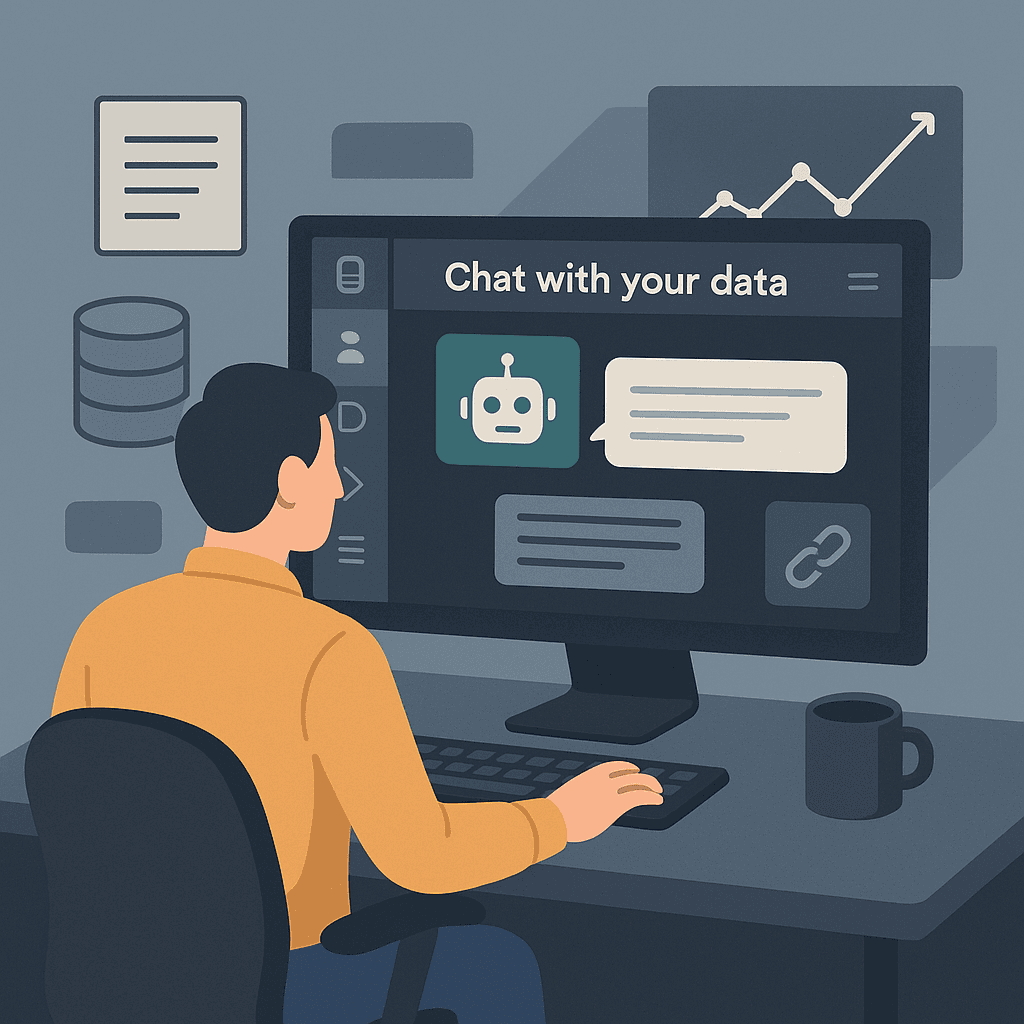
Chat With Your Data: AI and Privacy Hand in Hand
Harnessing the power of AI without compromising on security and privacy? That’s exactly what Chat With Your Data (CWYD) offers. This intuitive solution enables you to seamlessly connect AI technology with your own data sources, allowing you to analyze your business information quickly and easily—without concerns about data loss or privacy breaches. With CWYD, everything revolves around user-friendly data analysis through a trusted chat interface, with privacy and security as top priorities. All data remains secure within your infrastructure and is stored in compliance with GDPR in a European data center. This way, you have full control over your data while benefiting from the power of modern AI.

AI Without Worries: Privacy and Security in Your Hands
Many companies are eager to use AI tools like ChatGPT but are concerned about data privacy and security. The idea of sending sensitive business information to an external service can be daunting. However, this doesn’t mean the end of AI innovation within your company! At Laava, we understand that security and confidentiality come first. That’s why we offer specialized and personalized AI solutions tailored to your needs and fully usable in-house. No more worries about data leaving your infrastructure—we ensure that AI remains within your secure environment, without sharing sensitive information with third parties.

What Can AI Agents Do for Your Business?
Artificial Intelligence (AI) agents are increasingly becoming the secret ingredient behind successful companies, revolutionizing processes that were once manual, repetitive, or simply inefficient. If you've ever wondered how AI could propel your business forward, this post will explain how AI agents work and the value they can bring to various sectors. From automating tedious tasks to enhancing customer interaction, AI agents are set to redefine how businesses operate. Let’s take a look.

How to Start Integrating AI into Your Business
Imagine it’s Monday morning. You walk into the office with a steaming cup of coffee in hand, and the future whispers to you: “AI.” But where do you even begin? Here’s a practical, slightly cheeky guide to help you take your first steps in integrating AI into your business.
Why We Chose LangGraph for Production AI Agents
Building an AI agent demo takes a weekend. Shipping one to production takes months. After deploying LangGraph-based agents for enterprise clients, we share the practical reasons we chose it over alternatives like AutoGen, CrewAI, and OpenAI Assistants — from durable execution and human-in-the-loop to fault tolerance and model-agnostic design.